
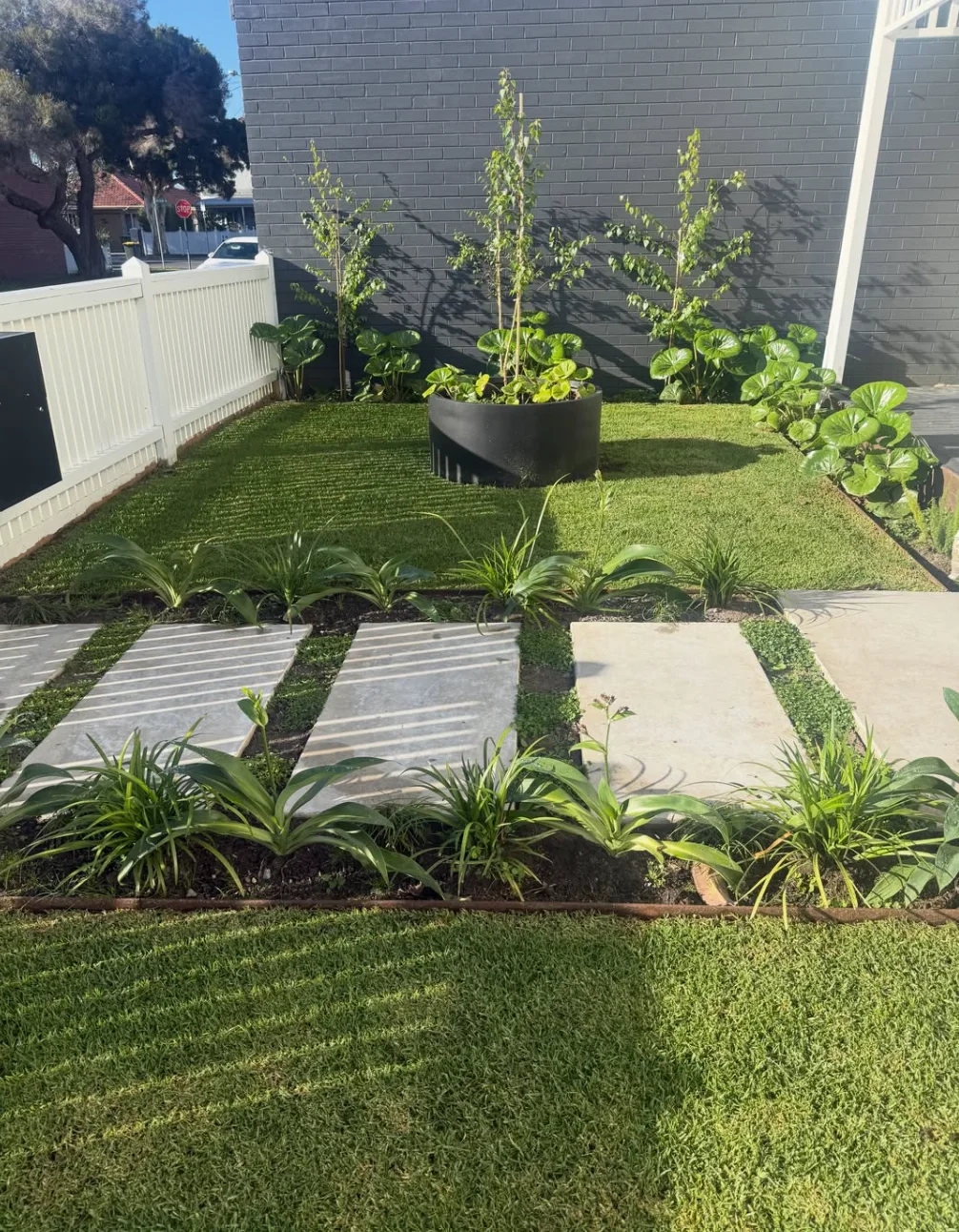
When the owners of this Newport home first called us, they were honest about it. Their front yard was the one part of the house they avoided. Patchy lawn, a cracked path, a couple of overgrown shrubs and not much else. They'd just finished renovating inside, painted the brickwork a deep charcoal, and the garden was letting the whole place down.
Their brief was simple. They wanted something modern that felt green and soft, would look good from the street, and wouldn't eat up their weekends. That's a brief we hear a lot across the inner west, and it's one we love working with.
Starting With the Wall
The charcoal brick wall was the best thing the yard had going for it, so we designed around it. Dark walls make greenery pop, giving the planting a strong visual backdrop.
Instead of hiding the wall, we used it as a backdrop. Three silver birches now stand in front of it, planted in a loose line so they read as a little grove rather than a row of soldiers. Their white trunks and fine leaves stand out beautifully against the dark brick. As they grow, their canopy can bring dappled shade to the lawn, with mature size and clearance from the front windows part of the planting plan.
A few people have already asked us what those trees are, so for the record: silver birch. They're deciduous, so you get bare branches and winter sun in the cooler months, fresh green in spring, and soft yellow colour in autumn.
Oversized Concrete Steppers for Clean Lines
The old path had cracked and lifted in a couple of spots, which made it a trip hazard. We pulled it out completely and replaced it with large-format concrete steppers, laid with generous gaps between each one.
Why oversized? Smaller pavers can look busy in a compact front yard. Big steppers give you a calm, architectural feel and help the space feel more open. The gaps are filled with a low groundcover that softens the edges and leaves room for water to reach the soil. How well it soaks in still depends on the base, soil and site drainage.
It's a small detail, but it's one of the things that makes a garden feel designed rather than just built.
Lush, Layered Planting
Layering is what gives a garden depth. Rather than a single row of shrubs along the fence, we planted in tiers:
- Tall: silver birches against the wall for height and structure.
- Mid level: big, glossy round-leafed foliage plants clustered under the birches for a lush, layered finish.
- Low: arching strappy plants along the edges of the steppers to frame the path.
- Ground level: a creeping groundcover between the steppers to tie it all together.
A black round planter sits in the middle of the lawn as a focal point. It breaks up the green, echoes the dark tones of the wall, and gives the eye somewhere to land when you look in from the street.
Every plant was chosen to suit Melbourne's conditions and the yard's mix of sun and shade. Big thanks to the team at Plantmark for supplying such healthy stock.
Steel Edging and a Fresh Lawn
To keep everything sharp, we installed steel edging between the garden beds and the lawn. It helps limit grass spreading into the beds, keeps mulch where it belongs, and gives the whole design those crisp lines the owners were after. Over time it weathers to a warm rust tone that works well with the planting.
We finished with a new lawn laid over properly prepared soil. A healthy lawn starts underneath, so we spent time getting levels and drainage right before a single roll went down. The result is a dense, vibrant green that already looks like it's been there for years.
Low Maintenance by Design
'Low maintenance' gets thrown around a lot, so here's what it actually means for this garden:
- Plants selected for the site and local climate, with watering needs considered from the start.
- Steel edging to make keeping the lawn edges neat more straightforward.
- Groundcover between steppers to soften the path, with occasional trimming and weeding as needed.
- Deciduous trees that bring seasonal change, with leaf fall and mature size allowed for in the maintenance plan.
The owners can now enjoy a quick Saturday-morning tidy instead of a whole afternoon wrestling with it. New planting still needs establishment watering, and lawns, groundcover and trees need ongoing care. The garden will develop as the birches fill out and the planting knits together.
What the Owners Had to Say
When we did the final walk-through, the owner told us she'd caught herself sitting on the front step with a coffee that morning, something she hadn't done once since they moved in. That's the best feedback we can get. A front garden should make you want to be outside, not avoid it.
Thinking About Your Own Front Garden?
Whether you're in Newport, Williamstown, Yarraville, Footscray or anywhere across Melbourne's inner west, the right front garden design can completely change how your home looks and feels. We handle everything from design through to construction and planting, so you deal with one team from start to finish.
Ready to transform your front yard? Get in touch with PJR Landscaping & Design for a free consultation and let's talk about what's possible for your space.
Request a consultationFrequently Asked Questions
How long does a front garden makeover like this take?
A project of this size usually takes one to two weeks on site, depending on weather, access and how much demolition is involved. We confirm the scope and expected schedule for your property before work starts.
Are silver birches a good choice for Melbourne front gardens?
Silver birches can suit Melbourne gardens and bring lovely seasonal change and a light canopy. They need reliable moisture, suitable soil and room for their mature size, so the choice should be checked against your site's sun exposure, available space and watering plan. Good soil preparation and mulching help.
What's the most low-maintenance option between pavers or steppers?
A suitable creeping groundcover can soften hard edges and leave permeable gaps between steppers. Choose a variety suited to the light, moisture and expected foot traffic. Groundcover still needs establishment watering and occasional trimming or weeding, and drainage depends on the underlying base and soil.
Do you design and build, or just design?
Both. PJR Landscaping & Design handles the full process, from the initial concept through to construction, planting and turf.