
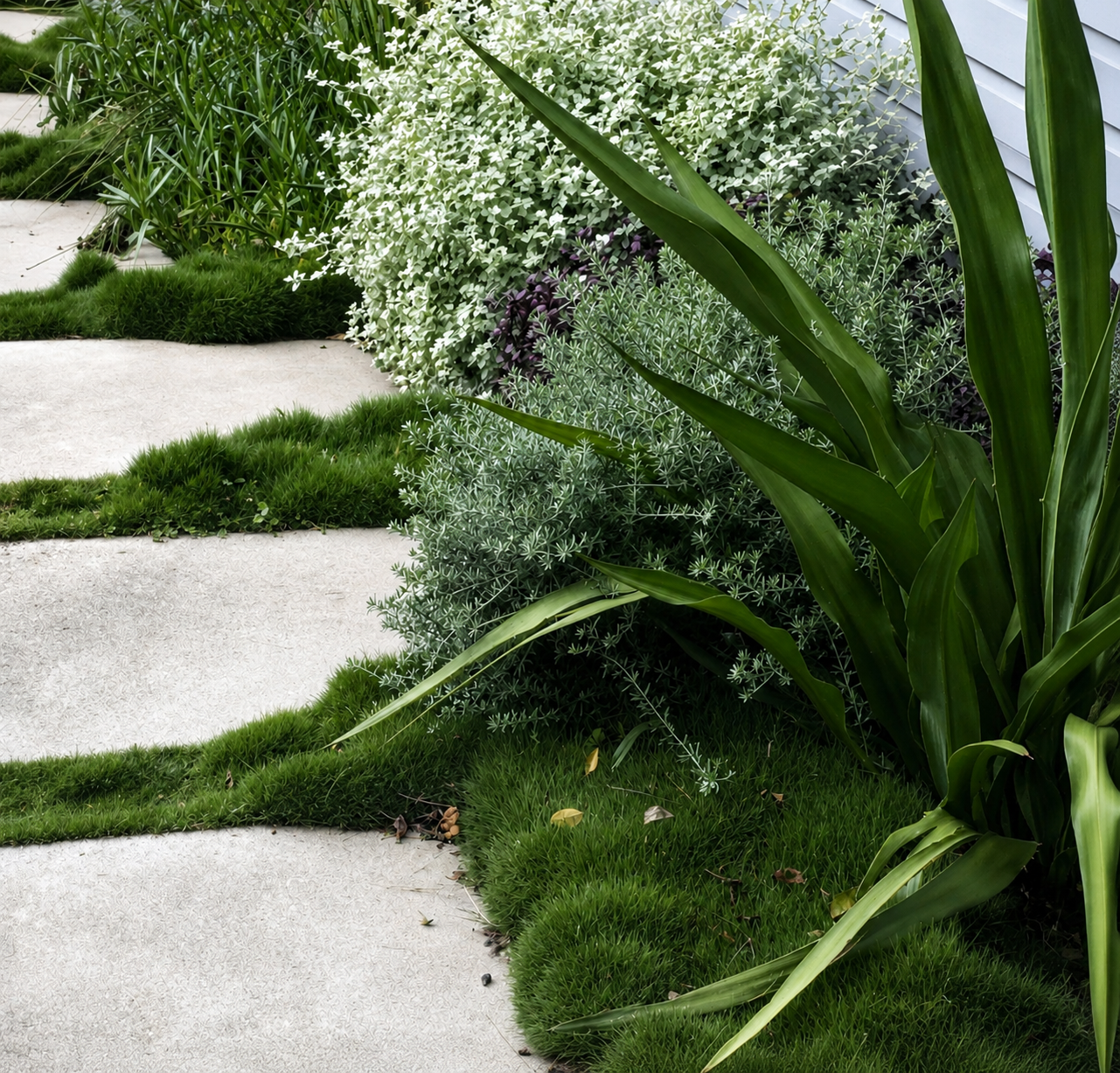
The path through this Port Melbourne garden is doing more than getting you from one point to another. It gives the planting room to be the main event.
Small gardens often get designed from the hardscape first. Where does the path go? How much paving can fit? Where will the furniture sit? Those are sensible questions, but they can leave planting squeezed into whatever narrow strips remain. This garden takes a different approach. The path still has a clear job to do, but it moves gently through the space and gives the surrounding planting enough room to settle in.
It is a good example of why a simple material palette can go a long way. Pale paving, green groundcover and a small collection of plants with different shapes and heights are enough to make the garden feel generous without trying too hard. For homeowners planning landscaping in Port Melbourne, it is also a useful reminder that the path, plants and edges should be planned together.
A path does not have to be the loudest part of the garden
Paving is often the most permanent part of a landscape, so it is tempting to make it highly formal or fill as much of the available area as possible. In a compact garden, that can make everything feel a little hard. Here, the curved route breaks up the surface and allows the garden beds to push forward around it.
The curve is not there for decoration alone. It slows the eye down and makes the trip through the garden feel less direct. That matters in a space where there may only be a few metres between the house, fence and planted edge. A well-designed paved pathway can create that sense of movement while still being easy to walk on and maintain.
Groundcover makes the hard edges feel at home
One of the most useful details in this garden is the low groundcover sitting right up against the paving. It softens the border between the path and planting, covers bare soil and makes the path feel like it belongs in the garden rather than being laid over the top of it.
Groundcover is not a replacement for lawn in every situation, especially where people need a large open area for regular use. But for narrow edges, low-traffic parts of a garden and spaces around a path, it can be a much better fit. It brings texture close to the ground, reduces the amount of exposed soil and avoids creating another fiddly strip that needs constant mowing. Our guide to using groundcover instead of lawn explains where it works best.
Planting needs contrast, not clutter
The planting in this garden works because it is layered. Low, fine-textured planting sits near the path, softer foliage fills the middle layer and larger architectural leaves give the eye somewhere to rest. There is contrast between light and dark greens, broad leaves and fine leaves, but it does not feel like every plant is competing for attention.
That is the balance we look for when designing garden planting. A garden can have plenty of variety without becoming busy. Giving each plant enough space, repeating a few shapes or tones and thinking about how the layers will grow together usually produces a better result than adding more species for the sake of it.
The construction details still matter
A soft, established look depends on what happens underneath the finished surface. Paving needs a sound base, garden beds need enough depth for the chosen plants and water needs somewhere sensible to go. If those fundamentals are missed, the nicest planting palette in the world will struggle to hide the problem.
This is why we approach a garden as a complete build rather than a list of separate jobs. Levels, edging, paving, soil preparation and planting all affect one another. Bringing those pieces together through full landscape construction helps the garden look good when it is finished and gives it a better chance of staying that way.
What this Port Melbourne garden gets right
A clear route
The path connects the space without taking over the garden.
Soft edges
Groundcover brings the paving and planting together.
Layered planting
Different foliage shapes create interest at several heights.
A restrained palette
A small number of materials lets the garden feel calm and cohesive.
Frequently asked questions
What works well in a compact Port Melbourne garden?
Compact gardens work best when the layout is clear and the materials are kept purposeful. A well-placed path, generous planted edges and a small number of strong feature plants can create a garden that feels more spacious without becoming busy.
Can groundcover be used beside paving?
Yes. Groundcover is a practical way to soften hard edges and connect paving to planted areas. The right species depends on the amount of sun, soil depth, drainage and expected foot traffic.
Does a garden path need to be straight?
No. A curved path can be useful when it helps the garden flow around planting, creates a gentler route through a small space or suits the style of the home. The important part is that it remains practical and gives the garden a clear structure.
How do you choose plants for a bayside garden?
Plant choices start with the actual conditions of the site, including aspect, wind exposure, soil, drainage and how much maintenance is wanted. A layered mix gives the garden structure while allowing individual plants room to grow.
Related Services
Planning a garden refresh?
Start with the way you want the garden to feel
If you are planning a garden in Port Melbourne or the surrounding bayside suburbs, we can help bring the layout, materials and planting together into one considered build.
Start Your ProjectFurther reading
Thornbury front yard: curved crazy paving, brickwork, lawn and planting →Landscaping in Port Melbourne: services, project work and local advice →Groundcover instead of lawn: a smarter choice for Melbourne gardens →How drainage works in residential landscaping →By Zahn ·