
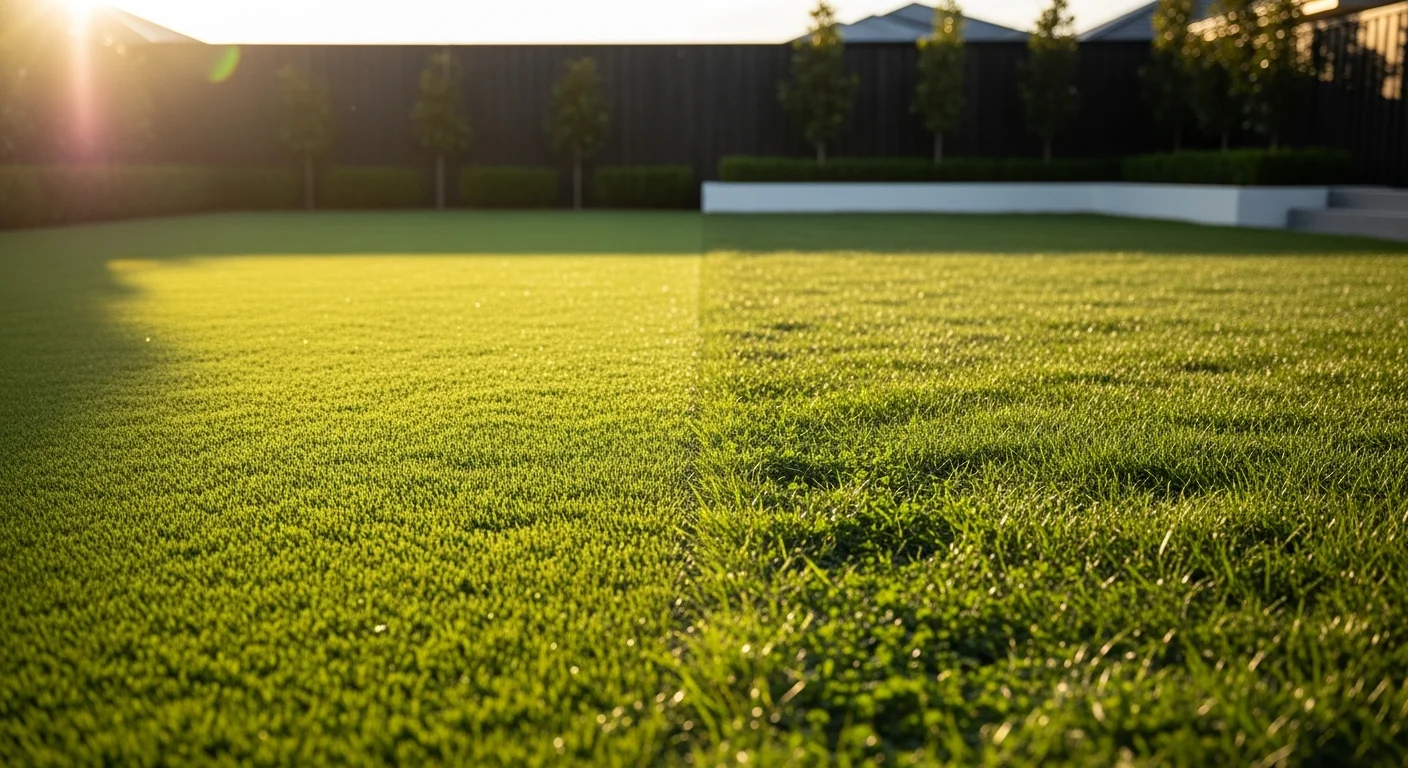
It's one of the most common questions we hear from Melbourne homeowners: should we go artificial or stick with natural grass? There's no single right answer, but there is a right answer for your specific property, lifestyle, and budget. Here's how to think through it.
Melbourne's climate creates a genuine dilemma for lawns. Summers are hot and increasingly dry, water restrictions are a regular reality, and clay soils make even a well-intentioned natural lawn difficult to maintain through January and February. At the same time, artificial grass has improved dramatically over the past decade. It no longer looks or feels like carpet, and installation quality has lifted across the board.
The debate has also shifted. It's no longer just about aesthetics. Homeowners now weigh up cost over time, environmental impact, heat retention, and what the lawn will actually get used for before making a decision.
The honest cost comparison
Upfront, artificial grass costs more. Quality synthetic turf installed in Melbourne typically runs between $60 and $110 per square metre, including base preparation and weed matting. A standard 50sqm backyard will cost approximately $3,000 to $5,500 installed depending on the product and how much ground preparation is needed.
Natural lawn installation is cheaper to start: turf supply and laying runs roughly $20 to $40 per square metre, so the same 50sqm area might cost $1,000 to $2,000 to establish.
But the real cost comparison happens over time. Natural lawn requires ongoing watering, fertilising, mowing, pest control, and periodic renovation. These costs add up to several hundred dollars per year even for a moderately maintained lawn, plus the time investment of regular mowing through spring and summer.
Artificial grass has no ongoing watering cost, minimal maintenance, and typically lasts 15 to 20 years with a quality product. When you factor in the lifetime running costs, the premium for synthetic turf often pays for itself within five to eight years for a typical Melbourne property.
| Factor | Artificial Grass | Natural Lawn | Edge |
|---|---|---|---|
| Upfront install (50sqm) | $3,000 – $5,500 | $1,000 – $2,000 | Natural |
| Annual maintenance | Near zero | $300 – $800+ | Artificial |
| Water usage | None (except hosing) | High in summer | Artificial |
| Lifespan | 15 – 20 years | Indefinite with care | Natural |
| Summer heat retention | High (60–70°C surface) | Cool (evapotranspiration) | Natural |
| Appearance year-round | Consistent | Seasonal variation | Artificial |
| Pet friendliness | Easy to clean | Can wear/burn patches | Depends |
| Environmental impact | Plastic product | Carbon capture, biodiversity | Natural |
How Melbourne's climate affects the decision
Melbourne's variable climate is the key factor most guides don't adequately address. The city experiences genuine four-season variation: wet winters, dry summers, occasional frost in outer suburbs, and increasingly frequent heatwaves that push temperatures above 40 degrees.
For natural lawn, the critical period is January through March. Without an automated irrigation system and drought-tolerant turf variety, you will struggle to keep a natural lawn looking good during summer. Kikuyu and couch are the most resilient options; they go dormant and brown during dry periods but recover when water returns.
For artificial grass, the critical issue is surface temperature. On a 35-degree Melbourne day, synthetic turf can reach 60 to 70 degrees Celsius, hot enough to burn bare feet and uncomfortable for pets and young children.
Melbourne-specific note
If your backyard is predominantly in shade, which is common in the inner suburbs where terrace houses are close together, artificial grass can struggle with drainage and develop odour issues. Natural lawn with a shade-tolerant variety like fescue or tall buffalo is often a better fit.
Lifestyle factors that tip the decision
Kids and heavy use
High-use areas like play zones benefit from artificial grass because natural turf compacts and wears through quickly under heavy foot traffic. Synthetic turf bounces back. The heat issue matters more here though: if kids will be playing on the surface in summer, factor in whether there's shade coverage.
Pets
Artificial grass is easier to clean for pet owners: waste can be hosed off and deodorised infills help with odour. Natural lawn gets patchy burn spots from dog urine and wears through in favourite routes. However, pets can also damage artificial turf by digging, and some dogs develop skin sensitivities to synthetic surfaces in heat.
Rentals and investment properties
For investment properties, artificial grass is increasingly popular because it eliminates maintenance responsibility disputes between landlords and tenants and presents consistently well in photos and inspections.
Sustainability-conscious households
Natural lawn wins on environmental grounds: it supports soil biology, provides carbon sequestration, reduces urban heat island effect, and supports insect populations. Artificial grass is a petroleum product that will eventually end up in landfill.
Which should you choose?
Choose artificial grass if…
- ·You want to eliminate mowing permanently
- ·You have young children using the space heavily
- ·You have pets and want easy cleaning
- ·Your lawn area is small (under 80sqm)
- ·Water restrictions affect your area regularly
- ·It's a rental or investment property
Choose natural lawn if…
- ·You have a large area where cost is prohibitive
- ·Your space is predominantly shaded
- ·You want environmental benefit from your garden
- ·Young children play barefoot in summer
- ·You value the feel and smell of real grass
- ·You have an irrigation system already in place
The honest answer for most Melbourne suburban properties in the 50 to 100sqm range is that artificial grass makes financial sense over a 10-year horizon and eliminates a significant ongoing maintenance burden. For larger properties, rural-style blocks, or households with strong environmental values, natural lawn with a drought-tolerant variety is still the better choice.
There's also a hybrid approach worth considering: artificial grass in the high-use zones with natural lawn retained in lower-use or garden-adjacent areas.
What to look for in a quality artificial grass product
30 to 40mm is the standard for backyard lawns. Shorter pile looks more like a sports surface; longer pile can flatten and look unnatural over time.
S-shaped or C-shaped blades spring back better than flat blades and maintain their upright appearance longer under foot traffic.
Essential in Melbourne's UV environment. Check the warranty and ask specifically whether UV fade protection is included. Budget products often skimp on this.
Melbourne gets heavy rain events in winter. The turf's backing needs a drainage rate sufficient to handle downpours; a good product drains at a minimum of 30 litres per square metre per hour.
Reputable products carry an 8 to 10 year warranty. Be cautious of anything shorter on a product you're paying full price for.
Frequently asked questions
Is artificial grass worth it in Melbourne?
For the right household, yes. If you have a small backyard, pets, kids, or want to eliminate mowing and watering costs, artificial grass pays for itself within a few years. For larger properties or homeowners who value a natural feel, the upfront cost and heat retention issues make natural lawn a better fit.
How long does artificial grass last in Melbourne?
Quality artificial grass typically lasts 15 to 20 years with proper installation and basic maintenance. Melbourne's UV exposure can degrade cheaper products faster, so it's worth investing in a product with a UV stabiliser rating suited to Australian conditions.
Does artificial grass get hot in Melbourne summers?
Yes. On a 35-degree Melbourne day, synthetic turf surface temperatures can reach 60 to 70 degrees Celsius. This is a real consideration for families with young children and pets. Shaded areas and premium infill choices such as cork or zeolite can reduce surface temperatures somewhat.
What grass type is best for Melbourne's climate?
For natural lawn in Melbourne, kikuyu and couch are the most heat and drought tolerant options. Buffalo (Sir Walter or Palmetto) handles shade better and has a softer feel underfoot. Fescue blends work well in cooler, shadier Melbourne gardens but need more water in summer.
How much does artificial grass cost to install in Melbourne?
Installation typically costs between $60 and $110 per square metre. A standard 50sqm backyard would cost approximately $3,000 to $5,500 installed. This includes base preparation, weed matting, and joining. Cheaper products tend to fade and flatten faster in Melbourne's climate.
Related Service
PJR Turf Installation Melbourne — Sir Walter, Kikuyu & premium synthetic, installed by our own team →Not sure which option is right for your property?
Get an obligation-free quote
PJR works with Melbourne homeowners to design and install lawns that suit the block, the climate, and the household.
Get In TouchFurther reading
By Zahn ·